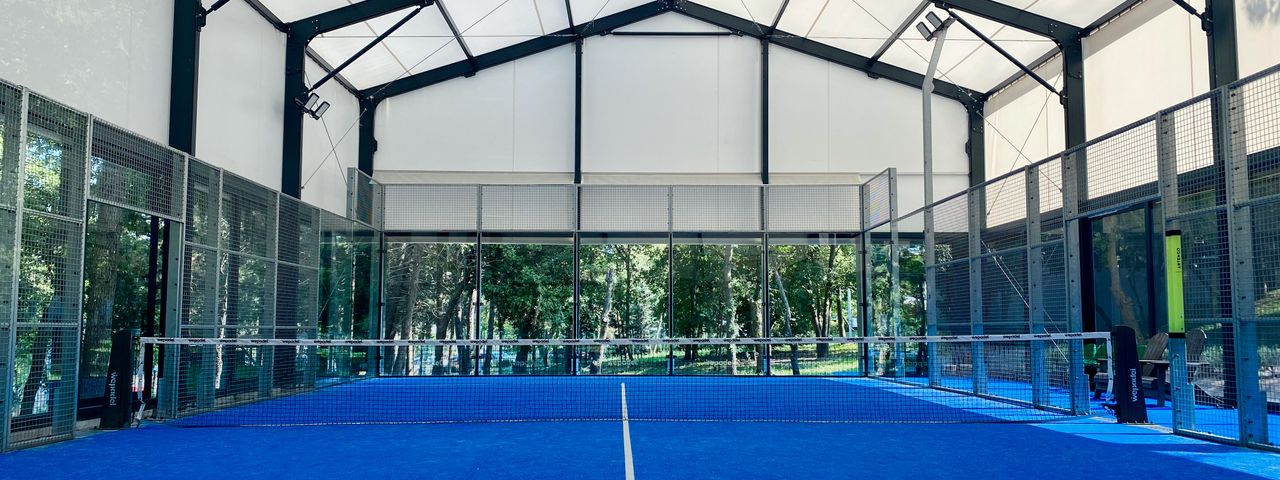
Padel is the fastest-growing racket sport in the world, and in recent years it has taken Israel by storm too. It's easy to learn, exceptionally social, and gets you into a real game from your very first try. In this guide you'll find everything you need to get started: what padel is, what gear you need, the basic rules, beginner tips, and how to find a court and partners to play with.
🎾 PlayRocket is already live, find players and download free
📲 Download nowSo what exactly is padel?
Padel is played in doubles (2 vs. 2) on an enclosed court roughly 10 by 20 meters, surrounded by glass walls and metal mesh. You play with a solid, stringless racket and a ball similar to a tennis ball but at slightly lower pressure. The big difference from tennis: the walls are part of the game. The ball can bounce off the wall and you keep playing, much like in squash. That combination makes padel dynamic, tactical, and incredibly fun.
Why padel is right for almost anyone
- Easy to start: the court is smaller than a tennis court and the racket is light and easy to control. Most people manage to keep a rally going in their very first lesson.
- Social: it's always played in doubles, so it's a game that brings people together and builds community.
- Fun at any age and level: great for kids, adults, beginners and pros alike.
The gear you need to get started
Padel racket
You don't need an expensive racket to begin. A light racket with a large "sweet spot" (teardrop or round shape) will be more forgiving and help you learn faster.
Balls
Dedicated padel balls, similar to tennis balls but at slightly lower pressure, which suits playing off the walls.
Shoes and clothing
Sports shoes with good grip (tennis/padel shoes are ideal) and comfortable sportswear. That's it, you don't need anything more.
The basic rules of padel (in brief)
- Scoring: the same as tennis: 15, 30, 40, game; a set is played to 6 games.
- Serve: below waist height, after one bounce, diagonally (just like in tennis).
- The walls: after the ball has bounced once on the floor on your side, it may hit the wall and you can still return it. The ball must not hit the wall before it touches the floor on your side.
- Objective: to make the ball bounce twice on the opponent's side, or have the opponent fail to return it legally.
That's the basics, and you learn all the finer points best while playing.
5 tips for beginners
- Patience over power: in padel, positioning and timing beat raw force. Don't try to "smash" the ball.
- Play with the walls: don't be afraid of the wall, it's your ally. Let the ball bounce and learn to read it.
- Communicate with your partner: call "mine" / "yours". Good padel is first and foremost about teamwork as a pair.
- Returns above all: most points are lost on errors, so just get the ball back and let your opponent make the mistake.
- Play against people at your level: a balanced match means faster improvement, less frustration, and real fun.
The 5 most common beginner mistakes in padel
Most beginners lose points for the exact same reasons. Know them in advance and you skip months of frustration:
- Trying to smash the ball: in padel, accuracy and position beat power. A ball hit too hard bounces off the back wall and hands your opponent an easy point.
- Fearing the walls: beginners run away from the ball coming off the glass. The wall is your ally, let the ball bounce and learn to read the angle.
- Staying at the baseline: in padel you control the game from the net. Players who never move up hand the initiative to the opponent.
- Not talking to your partner: half the points in doubles are lost to poor coordination. Call "mine" or "yours" out loud.
- Serving for power: the padel serve is a tactical opener, not a weapon. A safe serve that gets you into the point beats a risky ace.
How to choose your first padel racket by budget
The right racket transforms your first weeks. Here is how to choose without wasting money:
- Under 80 dollars: a basic racket or a court rental. Perfect for trying the sport before you buy.
- 80 to 160 dollars: the recommended beginner range. Look for a light racket (355 to 365 grams), teardrop or round shape, with a large sweet spot that forgives off center hits.
- Over 160 dollars: advanced diamond shaped rackets for attacking play. Not recommended for beginners since they are less forgiving.
From beginner to intermediate: a 90 day roadmap
Improving at padel is about order, not talent. Here is a simple path:
- Weeks 1 to 3: basic control, sustaining a rally, reading the ball off the back wall.
- Weeks 4 to 6: net play, basic volleys and partner communication.
- Weeks 7 to 9: the bandeja (the high ball off the wall), the vibora and pair tactics.
- Weeks 10 to 13: real matches against opponents at your level, where you improve fastest.
Etiquette and court routines in padel
Israel's padel community is warm and welcoming, and a few simple rules keep it that way:
- Arrive on time, a padel match starts and ends on a fixed schedule because the court is booked after you.
- Return balls that flew into the next court during a dead moment, not mid point.
- Call the score out loud before every serve to avoid disputes.
- Missing a player? It is easy to find a fourth through an app instead of cancelling.
How to find a padel court and partners to play with in Israel
🎾 PlayRocket is already live, find players and download free
📲 Download now, freeThe number of padel courts in Israel is growing at a dizzying pace: in Tel Aviv and the center, the Sharon region, Jerusalem, Haifa and the north, and the periphery. The real challenge usually isn't the court, but finding partners at your level, at a time that works for you.
That's exactly why we built PlayRocket: an app that matches you with partners by skill level and location, shows open games you can join, and helps you coordinate everything in one place, without five more WhatsApp groups and endless back-and-forth. And it's not just for padel: it's also for tennis, pickleball, badminton, beach tennis, squash and table tennis.
Find people to play padel. Today.
Hundreds of players in Israel are already arranging games through PlayRocket. Download free and get on the court this week.
- Instant access to the free app
- Our exclusive guide straight to your inbox
- Automatic entry to the launch giveaway for app downloaders
Completely free. Downloading enters you in the giveaway automatically.
Want updates on news and the giveaway? Leave your email
The giveaway is for app downloaders, for a limited time.
Thanks, we'll update you at launch.
Want to enter the giveaway right now? It's for app downloaders:
And share with a friend who'd want to play too:
Frequently asked questions about padel
Is padel hard to learn?
No. Padel is considered one of the easiest racket sports to pick up. The court is smaller than a tennis court and the racket is light and easy to control, so most people manage to keep a rally going in their very first lesson.
What's the difference between padel and tennis?
Padel is always played in doubles on an enclosed court where the walls are part of the game, with a solid stringless racket and an underhand serve below waist height. It's easier to learn and more social than tennis.
What gear do you need to start?
A padel racket, padel balls, sports shoes with good grip and comfortable clothing. Beginners should go for a light racket with a large sweet spot, and you can rent a racket at the court before buying.
Do you need a regular partner to play?
No. You can find partners and open games by skill level and location through apps like PlayRocket, even without a regular group.
How do you find a padel court in Israel?
The number of padel courts in Israel is growing fast all over the country. The easiest way to find an available court and partners to play with is through a dedicated app like PlayRocket, which finds games and players in your area.
Is there an app for finding padel partners in Israel?
Yes. PlayRocket is a padel app for finding partners by level, location and availability, not just booking a court. The app shows players and open games in your area in real time, so you can find someone to play with even without a regular WhatsApp group.